
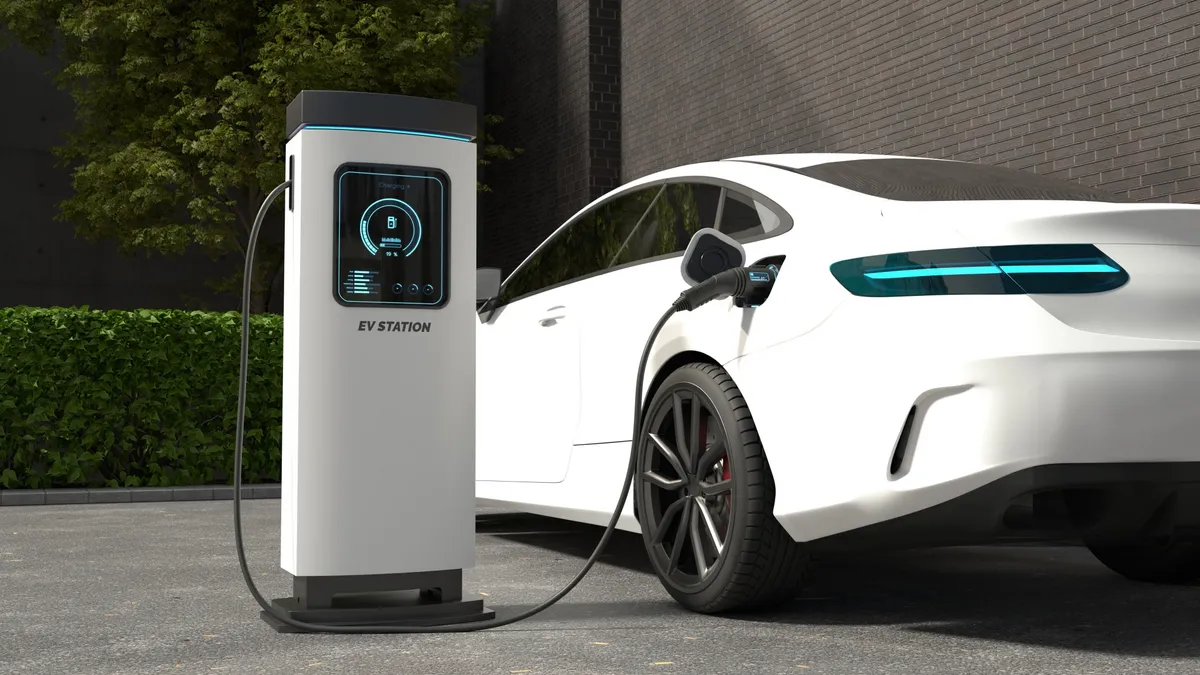
If you own a Tesla, a Chevy Bolt, a Nissan Leaf, or any other electric vehicle in Connecticut, selling it is a little different from selling a gas-powered car — and understanding those differences before you start can save you time and help you get a fair offer. The good news: the CT market for used EVs is solid right now, and local buyers like The Buy Center of Enfield actively purchase electric vehicles.
This guide covers what EV sellers in Connecticut should know: how EV resale value works, what affects your offer, what documents you need, and what makes selling to a local buyer different from using a national platform.
The CT Used EV Market Right Now
The Connecticut electric vehicle market has changed significantly over the past year. Federal EV tax credits expired in late 2025, which caused a brief market correction. By mid-2026, however, used EV prices have stabilized and are running roughly 8% higher than they were a year ago — a meaningful recovery driven by rising gasoline prices and continued local demand.
Connecticut has seen a 20% year-over-year increase in total EV and plug-in hybrid registrations, which tells you there is a real, active buyer pool in this state. If you have been waiting to sell your EV, the current market is favorable: values have rebounded, and motivated buyers are looking.
Connecticut's CHEAPR program (Connecticut Hydrogen and Electric Automobile Purchase Rebate) still offers a $1,000 state rebate for qualified fully electric vehicles — which is a selling point you can mention to private buyers, though professional buyers like The Buy Center of Enfield handle the paperwork themselves.
What Affects the Value of Your Electric Car in CT
EV resale value works differently than traditional cars. Here are the factors that matter most when a buyer — private or professional — evaluates your vehicle:
Battery Health and Range
Battery health is the single most important factor unique to EVs. Industry data shows that most used EVs retain over 94% of their original battery capacity, which is reassuring — but how buyers measure and verify this varies. For Teslas, the in-car app shows battery health data directly. For other EVs, an OBD-II diagnostic tool can pull state-of-health readings.
A battery showing strong health commands a better offer. If your EV has reduced range due to battery degradation, buyers will discount accordingly. The key is transparency: professional buyers like The Buy Center of Enfield will inspect the vehicle and account for battery condition in the offer.
Model Year and Charging Architecture
Newer EVs often feature faster charging systems (800-volt architecture is becoming standard on newer platforms) and longer ranges. Older models with slower charging or lower EPA-rated range face steeper depreciation relative to current-year vehicles. This is sometimes called technology obsolescence in the EV market — and it is more pronounced than in gas cars because battery and charging technology is advancing quickly.
A 2021 or 2022 EV is in a different position than a 2018 or 2019 model. Knowing where your vehicle sits in that curve helps you set realistic expectations before you get an offer.
Mileage Still Matters — Just Differently
With gas cars, mileage is often the first thing buyers look at. With EVs, it matters — but it is secondary to battery health. A 60,000-mile Tesla with a healthy battery is often worth more than a 40,000-mile example with degraded capacity. The odometer and the battery health report tell the full story together. For more on how mileage factors into overall car value, see our guide on how mileage affects your car's value.
Trim Level, Color, and Options
Tesla Model 3 Long Range and Performance trims hold value better than Standard Range. Dual-motor all-wheel-drive is preferred in Connecticut winters. For any EV, popular colors (white, black, grey) tend to resell faster than unusual colors. Full self-driving software on a Tesla is often valued by buyers — though its transferability between owners is model- and software-version dependent, so confirm the status before the sale.
What Documents Do You Need to Sell an EV in Connecticut?
Selling an electric vehicle in Connecticut requires the same core documents as selling any car. There is no EV-specific paperwork at the CT DMV level:
- Certificate of Title: This is the most important document. It must be in your name, free of liens (or the lienholder must provide a release), and properly signed on the assignment section when you sell. If your title has a lien (you financed the vehicle), that must be satisfied before or at the time of sale.
- Current registration: Your most recent CT DMV registration document confirms the vehicle identification number and helps confirm ownership history. While the buyer can verify via the title, having the registration handy speeds things up.
- Odometer disclosure: Federal law requires an odometer statement when transferring ownership. This is typically part of the title assignment section — fill it in accurately.
- Bill of sale (optional but recommended): A simple bill of sale with the vehicle description, VIN, sale date, and both parties names protects you after the sale. When selling to a professional buyer, they typically provide their own bill of sale.
One EV-specific note: if your vehicle has an active charging network subscription or service plan (like a Tesla Supercharging plan, GM OnStar, or similar), cancel or transfer those accounts at or after the sale. These are account-level items, not DMV paperwork — but leaving them active can cause billing issues after the vehicle changes hands. For a full breakdown of CT title paperwork, see our Connecticut vehicle title transfer guide.
Selling to a Local Buyer vs. National Platform
For EV sellers in Connecticut, the most practical options are: listing privately (Facebook Marketplace, AutoTrader, or CarGurus), using a national instant-offer platform (Carvana, CarMax), or selling to a local professional buyer like The Buy Center of Enfield. Each path has tradeoffs.
Private Sale
You will likely see the highest gross number with a private buyer — but highest number and most money in your pocket are not always the same thing. With EVs, private buyers are often more anxious about battery health than professional buyers are; they may request inspections, negotiate based on incomplete battery data, or walk away. Private sales also expose you to liability for the vehicle after the sale if something goes wrong. And you carry the title risk until the payment fully clears.
National Platforms (Carvana, CarMax)
Carvana and CarMax both buy EVs. Carvana allows you to start with an online estimate; CarMax requires an in-person appraisal at one of their Connecticut locations (Hartford or East Haven). The process can take days or longer if there are title issues. Neither has deep local knowledge of the CT/MA market, and their offers can be inconsistent on EV models that move fast locally.
Local Professional Buyer
The Buy Center of Enfield buys used electric vehicles directly from Connecticut and western Massachusetts owners. You can start with an online instant offer at thebuycenterofenfield.com/sell-your-car, or bring your vehicle in for an in-person appraisal. There is no obligation, no dealer trade-in pressure, and no complicated multi-day process.
Payment is by business check, same day. The process works for fully electric vehicles and plug-in hybrids alike. The Buy Center buys running vehicles in the Hartford County area and western Massachusetts — so if your EV is driveable, it qualifies.
Should You Sell or Wait?
This is the question EV owners ask most often, and the honest answer is: it depends on your model, your battery health, and your personal timeline — not on a general market prediction.
What is true right now in Connecticut: the post-incentive market correction has largely played out, used EV prices have stabilized, and buyer demand is strong because gas prices are elevated. If you were waiting for values to recover from the 2025 dip, that recovery has happened in most EV segments. Waiting further introduces the usual uncertainty — and new EV model releases can affect used values unpredictably.
The practical move is to get a professional offer and see where you stand. It is free and takes less than ten minutes online. You are not obligated to accept it, and it gives you a real market data point instead of a guess.
A Few Things Unique to Selling a Tesla
Tesla is the most common EV brand in Connecticut and deserves a few specific notes for sellers:
- Title is clean and straightforward: Tesla titling is standard — your CT title lists the vehicle like any other car. There is no manufacturer-specific documentation required beyond the standard CT title assignment.
- Charging equipment: If you have a Level 2 home charger (a NEMA 14-50 adapter, a Wall Connector, or a third-party EVSE unit), it is worth disclosing whether it comes with the vehicle. Many buyers expect the mobile connector; a dedicated Wall Connector can be a sweetener. This is a negotiating point in private sales; professional buyers price the car itself.
- Software subscriptions: Full Self-Driving (FSD) capability is a transfer topic. If your vehicle has FSD purchased outright, it transfers with the vehicle in most cases. Confirm this in your Tesla account before the sale. Subscriptions do not transfer. Remove your personal Tesla account from the vehicle at the time of sale.
- Supercharging credits and referral benefits: These are account-level perks tied to your Tesla account. They do not transfer with the car. The buyer will create their own account linked to the vehicle after purchase.
Getting an Offer on Your EV in Connecticut
If you are an EV owner in Connecticut — whether you are in Enfield, Windsor, Suffield, Springfield, or anywhere in Hartford County or Hampden County — The Buy Center of Enfield makes it straightforward to get a professional offer on your electric or hybrid vehicle.
Start online at thebuycenterofenfield.com/sell-your-car. Enter your vehicle VIN and condition details, and you will receive an instant written offer. If you would rather come in person, bring your vehicle and title to the Enfield location — the in-person appraisal accounts for battery health and current condition in a way that online tools cannot fully capture.
There is no obligation to accept, no dealer pressure, no trade-in games. Just a direct, transparent offer on your EV. If it works for you, payment is by business check, same day.