
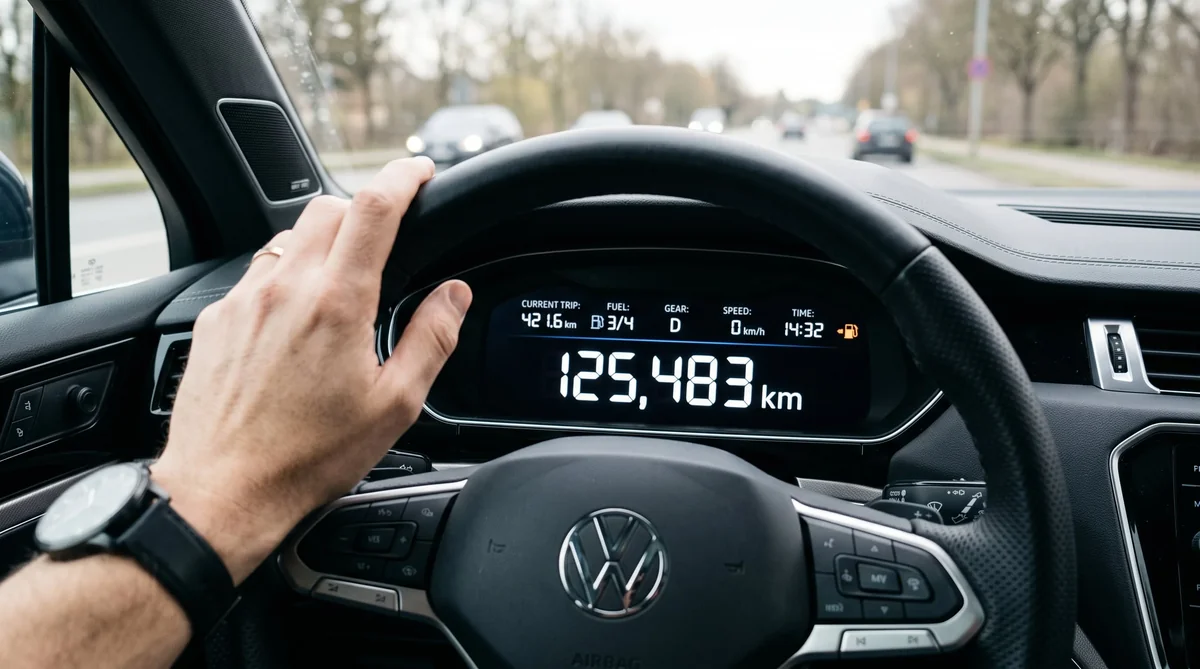
If you're asking yourself whether your car has too many miles to sell, you're not alone. It's one of the most common questions sellers bring to The Buy Center of Enfield — and the honest answer is: there's no single magic number. What matters is how those miles were driven, what make and model you own, and what condition the car is in today.
That said, mileage does matter, and there are real thresholds that affect buyer demand and offer values. This guide breaks down what those thresholds are, how to think about timing your sale, and what factors actually matter more than the odometer reading.
Is There a "Too High" Mileage to Sell a Car?
In practical terms, no — any running vehicle can be sold. But there are mileage ranges where buyer demand shifts, and those shifts affect your options and outcomes as a seller.
The two most commonly discussed thresholds are:
- 100,000 miles — The traditional psychological line. For years, crossing 100,000 miles meant a car had entered "high mileage" territory. Many buyers — especially private buyers — still treat it that way, which affects resale demand and pricing in the private market.
- 150,000–200,000 miles — The practical outer range for most makes and models, where maintenance history becomes the dominant factor. A well-maintained vehicle at 175,000 miles can still command a fair offer; a neglected vehicle at 90,000 miles often won't.
Professional buyers who appraise vehicles for a living think about mileage differently than private buyers. They're evaluating the whole vehicle — not just the odometer — and they have a realistic sense of what each car is worth at each mileage range given its actual condition.
How Mileage Thresholds Actually Work in the Used Car Market
The 100,000-mile mark creates what appraisers call a "buyer pool shift." Below 100,000 miles, more private buyers will consider the car. Above it, the pool narrows. That narrowing can make the private sale route harder — longer time on market, lower interest, more negotiation — but it doesn't mean professional buyers won't make a fair offer.
Beyond 100,000 miles, the next threshold is typically around 150,000 miles. After that, most vehicles have completed at least one full major service cycle — or should have. Buyers (and appraisers) will look closely at whether those services were done and documented.
Some makes are more forgiving at high mileage than others. Toyota and Honda vehicles, for example, frequently run well past 200,000 miles with proper maintenance. American trucks and SUVs can also reach very high mileage if maintained correctly. European luxury brands tend to see more dramatic value drops at higher mileage because of higher anticipated repair costs.
When Does Mileage Actually Hurt Your Sale?
Mileage hurts your sale when it intersects with deferred maintenance. A car approaching 100,000 miles that is due for a timing belt, a major transmission service, or other scheduled work will see steeper discounts — because whoever buys it knows those services are coming. A car that's had all of those services done at the correct intervals is in a much stronger position, even if the odometer reads higher.
Other situations where mileage becomes more of a sticking point:
- High mileage on a younger vehicle — A four-year-old car with 130,000 miles raises questions about how it was driven (lots of highway miles is better; lots of short city trips is harder on engines). The combination of high miles and low age can signal harder use.
- High mileage combined with deferred service — Missing oil changes, old brakes, worn tires. Each item compounds the effect.
- High mileage with accident history — Not a dealbreaker, but it adds complexity. See our guide on how accident history affects car value for more on that angle.
- High mileage on brands with expensive repair histories — On some European luxury vehicles, an appraisal at 120,000+ miles will reflect the anticipated cost of upcoming repairs more than the current mileage alone.
What About Highway Miles vs. City Miles in CT and MA?
This is something sellers in Connecticut and Massachusetts often ask about — and it's a real factor. Highway miles are generally better for an engine than city miles. Highway driving means consistent RPMs, less stop-and-go stress on the drivetrain, and longer intervals between braking cycles.
A vehicle driven mostly on I-91 between Springfield and Hartford is likely in better mechanical shape at 120,000 miles than a similar vehicle that spent those miles idling in Providence rush hour. Professional buyers who inspect the vehicle physically can often tell the difference — they're looking at brake wear, tire wear patterns, and other signs of the vehicle's actual use history, not just reading the odometer.
New England winters add a separate dimension. Road salt and freeze-thaw cycles accelerate rust on undercarriages, wheel wells, and brake hardware. A vehicle with above-average mileage but a clean undercarriage and fresh service records is often worth more than a low-mileage car with obvious rust and neglected maintenance. Keep in mind that mileage and condition work together — they're not separate factors.
The Best Time to Sell: Before Maintenance Milestones
If you're on the fence about whether to sell now or keep the car a while longer, one of the most useful questions to ask is: What major service is coming up next?
Many vehicles have major service milestones at 60,000 miles, 90,000 miles, and 120,000 miles. These often include:
- Timing belt or chain service (where applicable)
- Transmission fluid changes
- Spark plugs and ignition system service
- Coolant flushes
- Differential and transfer case service on AWD/4WD vehicles
If your car is approaching one of these milestones and you haven't completed the service, you're essentially selling a car that the buyer knows will need money spent on it soon. That gets factored into any offer. On the other hand, if you've just completed a major service and have the paperwork, that's a genuine selling point — it shows care and removes uncertainty for the buyer.
Selling just before a major milestone, or right after one where you have the documentation, tends to produce better outcomes than waiting until the mileage is significantly higher and more services have been deferred.
What Matters More Than Mileage
For professional buyers, mileage is a starting point, not the whole story. The factors that often carry equal or greater weight:
- Maintenance history — Documented oil changes, scheduled service, and records kept over time. This is the single biggest counterweight to high mileage.
- Make and model — Some vehicles simply have better high-mileage reputations than others, and that affects both the offer and the ease of resale.
- Overall condition — Interior, exterior, mechanical. A car that's been well cared for is worth more regardless of what the odometer says.
- Title status — A clean title, even at 150,000 miles, is a much better starting point than a rebuilt title at 60,000 miles.
- Current market demand — Some body styles, drivetrains (especially trucks and SUVs), and configurations hold value better at higher mileage than others because demand for them remains strong.
For a comprehensive look at how all of these factors interact, see our full guide on what affects your car's value.
So When Should You Sell?
There's no universal answer, but here are some practical guidelines:
- If you're approaching 100,000 miles and the car is in good condition, selling before crossing that threshold can produce better outcomes in the private market — though it makes less difference to a professional buyer who inspects the vehicle directly.
- If you've just completed a major service and have documentation, it's a good time to get an appraisal while that investment still shows in the vehicle's condition.
- If you're noticing deferred maintenance building up — or if a significant repair is on the horizon — it may make more sense to sell now than to invest in a vehicle you're planning to move anyway.
- If the car is running well, has a strong service history, and your make and model holds value at higher mileage, you may have more flexibility than you think.
The most reliable way to know where you stand is a professional appraisal. At The Buy Center of Enfield, we look at the whole vehicle — not just the odometer — and give you a same-day written offer with no obligation. Whether your car has 80,000 miles or 180,000, we'll tell you exactly what it's worth to us based on what it actually is.
Ready to find out what your car is worth? Get a same-day offer at The Buy Center of Enfield — no paperwork prep required, and payment is by business check the same day.
How we value your car fairly
Our UVeye AI scanner inspects tires, underbody, and exterior in seconds — objective condition data behind every offer.