
Where to Find Your Vehicle's VIN Number
Your VIN is how we make sure your quote is accurate. Watch the quick guide below, then find yours in under a minute — plus everything it tells us about your vehicle.
Why Your VIN Gets You an Accurate Offer
When you sell your car to The Buy Center of Enfield, your VIN is the key to a fair, precise offer. It lets our team confirm exactly what your vehicle is — no guesswork.
Exact Trim & Options
Your VIN tells us the precise trim, engine, and factory options — so your offer reflects what your car actually has, not a generic guess.
Title & Accident History
We verify title status and accident history from the VIN, protecting your offer from surprises and keeping everything transparent.
Odometer Verification
The VIN lets us confirm reported mileage against records, so the numbers we base your offer on are accurate.
Real-Time Market Pricing
We match your exact vehicle to live market data — the reason our written offers are competitive and same-day.
Share your VIN with your appraisal and we'll return a competitive written offer, typically within 30 minutes during business hours.
What Is a VIN?
A Vehicle Identification Number is a unique 17-character code — every vehicle's permanent identity. No two vehicles in the world share the same VIN; it's as unique as a fingerprint.
- Standardized since 1983 under the ISO 3779 international standard.
- Mandatory from 1981 — every vehicle in the United States carries one.
- The letters I, O, and Q are never used — to avoid confusion with 1 and 0.
Sample VIN
17 characters · no I, O, or Q
VIN Structure & Components
Every VIN tells a story — 17 characters split into distinct sections.
What Your VIN Unlocks
One number, a whole lot of information about your vehicle.
Vehicle History
Unlocks accident, service, and ownership records for any car.
Insurance
Insurers use the VIN to quote coverage and process claims.
Registration & Titling
Required for DMV registration, titling, and transfers.
Recall Lookups
Check open safety recalls tied to your exact vehicle.
Parts Ordering
Guarantees you get the correct parts for your specific build.
Theft Reporting
Helps law enforcement identify and recover stolen vehicles.
Where to Find Your VIN
Start with the two easiest spots — you won't need any tools.
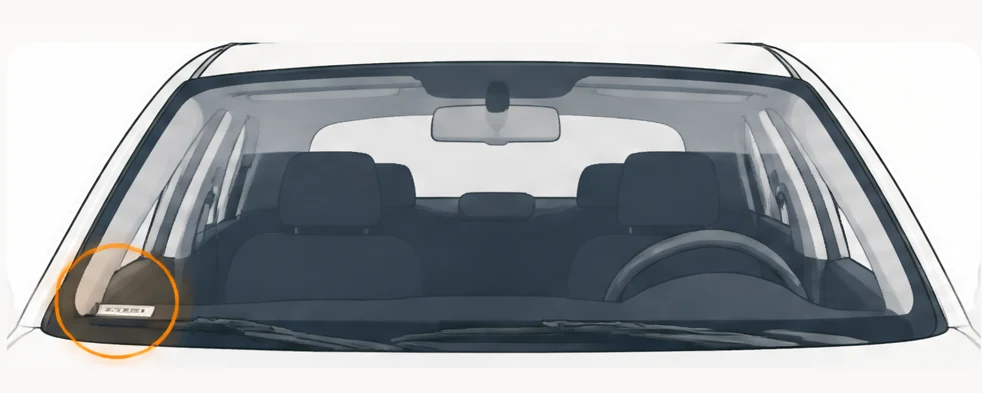 Most Common
Driver’s-Side Dashboard
Stand outside the car and look through the windshield at the lower corner of the dashboard on the driver’s side. You’ll see a small metal plate with the 17-character VIN. This is the easiest place to start.
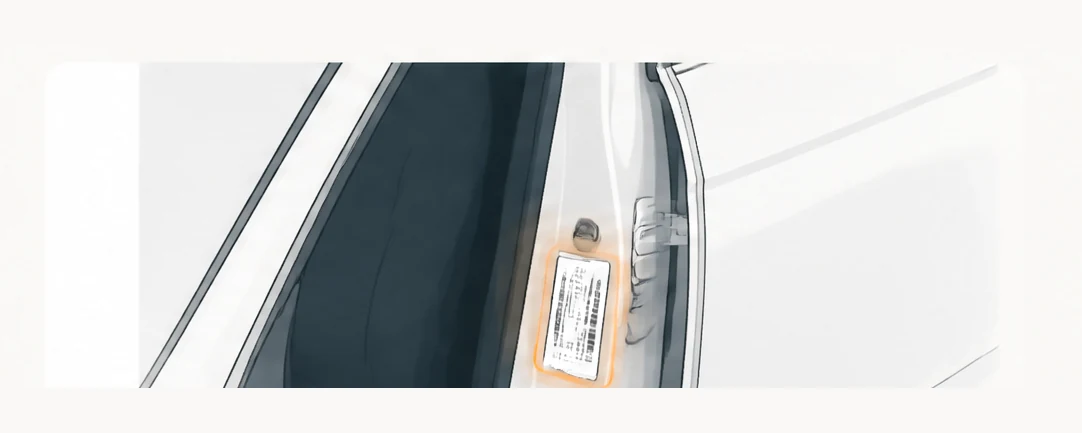 Backup Spot
Driver’s-Side Door Jamb
Open the driver’s door and look at the pillar (the frame the door latches onto). A manufacturer sticker there lists the VIN along with tire and weight information.
More Places It Can Appear
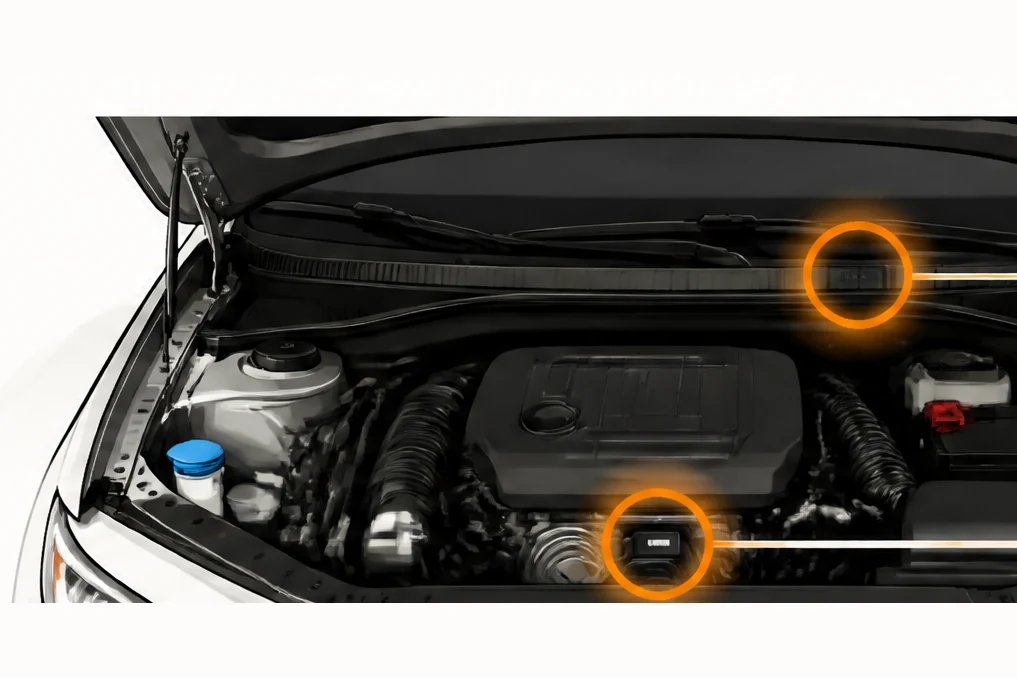
Engine Bay
Stamped on the firewall or the front of the engine block on many vehicles.
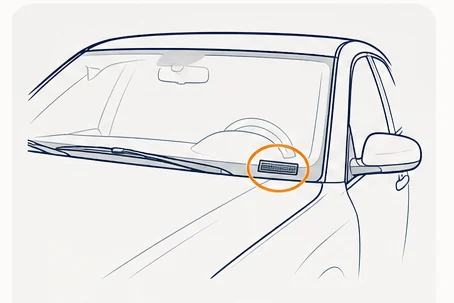
Windshield Corner
Visible on the metal plate at the base of the windshield, driver’s side.
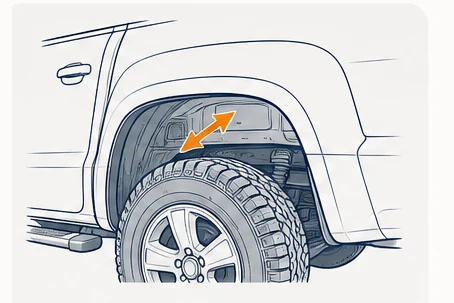
Rear Wheel Arch
Some models stamp the VIN on the frame above the rear wheel.
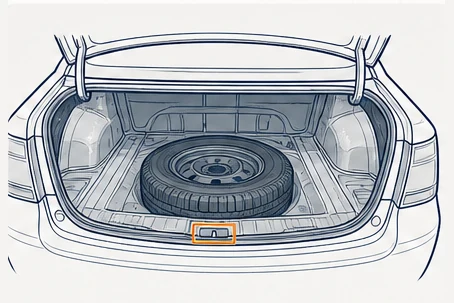
Spare Tire / Trunk Floor
Occasionally found under the spare tire or on the trunk floor pan.
On Your Paperwork
No access to the car right now? Your VIN is also printed on these documents:
Trucks & Motorcycles
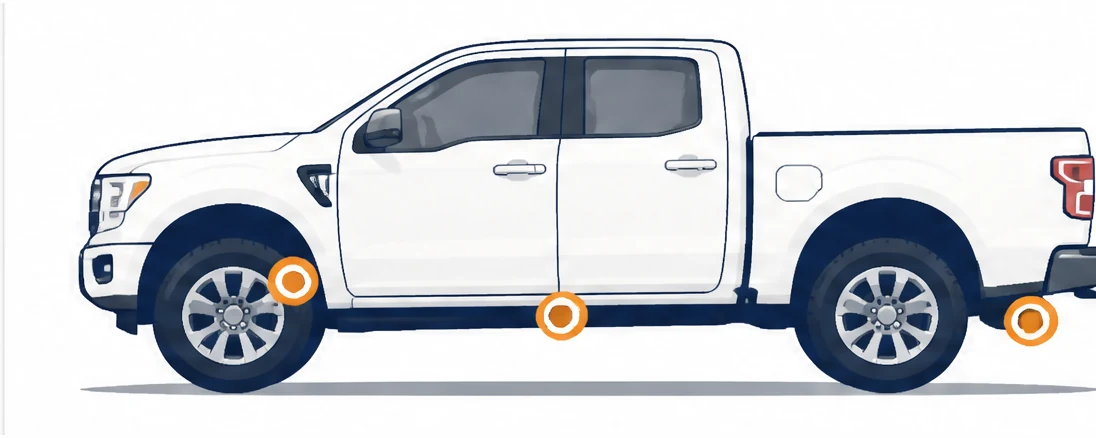
On a Truck
Check the same dashboard and driver's-side door-jamb spots as a car, plus the frame near the engine. Heavy-duty trucks may also list it on the door sticker with weight ratings.
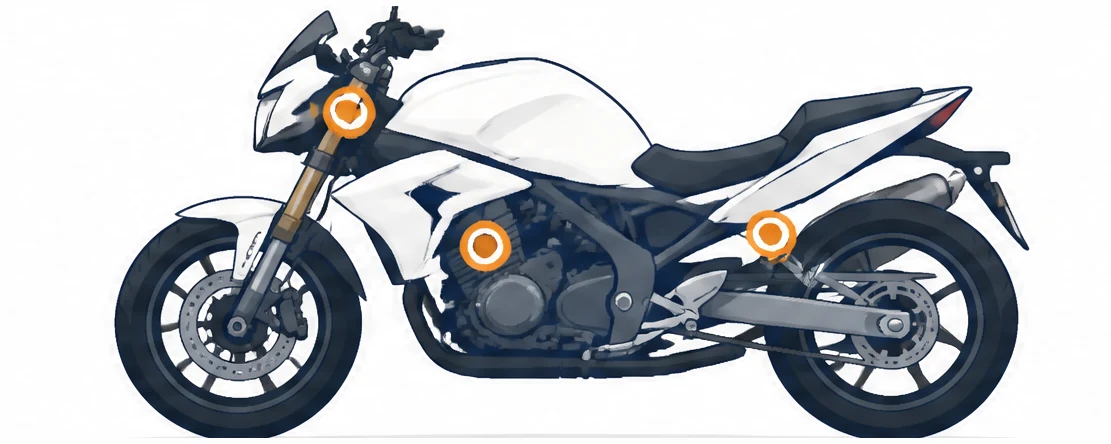
On a Motorcycle
Look on the steering neck (headstock) below the handlebars, on the engine case, or on the frame near the bottom of the front forks.
Best Practices & Tips
Start at the Dashboard
It’s the fastest spot — look through the windshield on the driver’s side before checking anywhere else.
Make the Numbers Match
The VIN on the car and on your title, registration, and insurance should all be identical.
Never Buy a Mismatch
If the VINs don’t line up, walk away. A mismatch can signal a serious problem.
Want the full guide as a PDF?
Download our complete “Where to Find Your VIN” guide to keep or print.
Frequently Asked Questions
Found Your VIN? Let's Get You an Offer.
Add it to your free appraisal and we'll return a competitive written offer — typically within 30 minutes.